SEPT 25 - 27, 2026 | LONDON

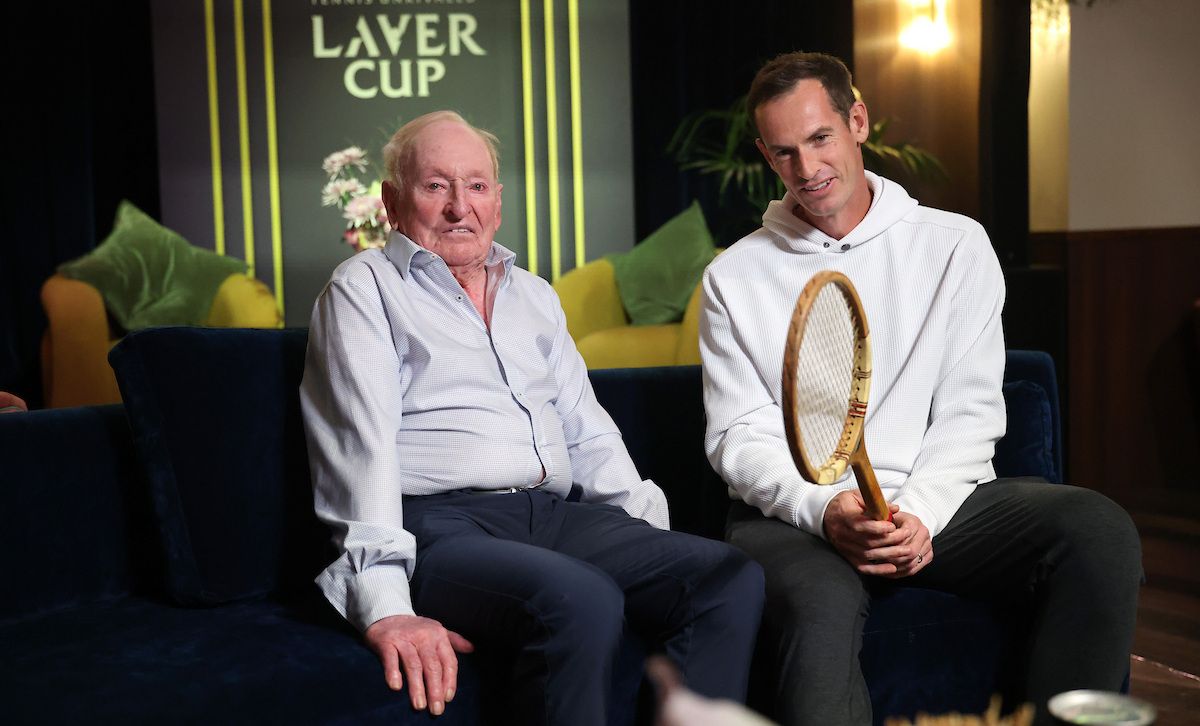
Brothers Andy and Jamie Murray took to the Laver Cup black court with a handful of Rod Laver’s 1960s Dunlop Maxply racquets. It was an eye-opening experience, so Andy sat down with Laver during Laver Cup London 2026 to get a bit more insight.
“It was amazing how much we had to adjust the technique,” Andy Murray told Laver. “You had to have huge forearms, didn’t you?”
Laver confirmed that his arm grew tired because the racquets weighed over 400 grams (in comparison, Carlos Alcaraz plays with a 310-gram racquet) were so heavy. Laver also said you had to time the ball perfectly, otherwise “it’s not going anywhere.” Laver said he was still putting topspin on the ball, but using a completely different technique than players today.
“Me and my brother looked like we were playing in slow motion,” Andy Murray said.
The two chatted about the change from the 1960s to now, discussing how players are “spoiled” with six new racquet frames every few months and constant restringing. Laver said he had three frames he used for years. “They seemed to work quite well for you,” Murray said, referring to Laver winning the calendar-year grand slam in 1962 and 1969. “You did quite well with them.”
As the racquets became larger, they also got lighter. “It’s changed a lot,” Murray said. “We need to remember that. It’s fascinating just to understand how you had to use the equipment you had. It’s tough to play with. You have to hit a lot flatter, more accurate, more precise. I like that.”
The two also chatted about how in the 1960s, only two or three balls were in play on the court (the modern game uses six balls at one time). Murray asked what happened if someone framed a ball outside the stadium. Laver had a quick response: “You go get it.”
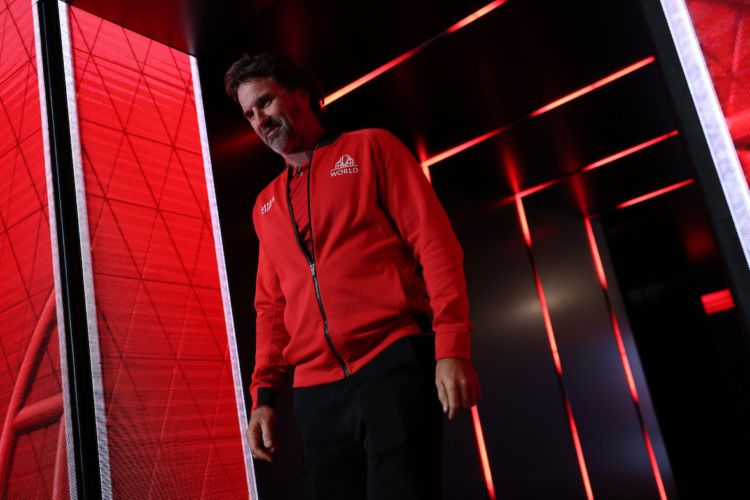
If the Laver Cup had existed during Team World vice- captain Pat Rafter’s generation, Team World might have impressed. “We would have had a pretty strong team,” Rafter told Andy Roddick during Saturday’s Served podcast. “Pete Sampras, Andre Agassi, Lleyton [Hewitt] and myself and Guga [Gustavo Kuerten].”
Roddick then joked they wouldn’t have been as good when Roger Federer, Rafael Nadal and Novak Djokovic showed up. “That’s your generation, not mine,” Rafter retorted. “Having those guys on the bench, it would have been interesting to see how I adapted to it.”
Rafter said as a coach that he’s always interested to see how players respond to the team atmosphere and is careful to not add to the pressure already in place. “When you are playing for your teammates, it is so much different than playing for yourself,” he said.
As a self-proclaimed “over-thinker” who said it was both a strength on the court and a weakness that at times paralyzed him, he didn’t want to add too much to Team World players but still knows certain patterns and nuggets need pointing out. It’s a delicate balance, but one he manages the better he gets to know each player.
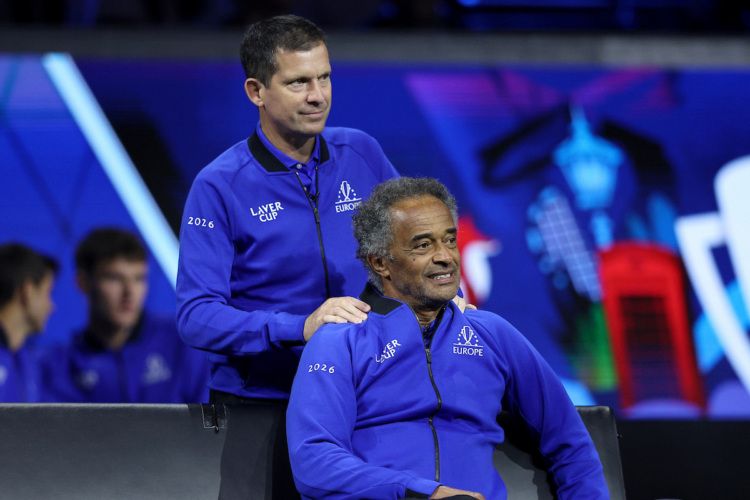
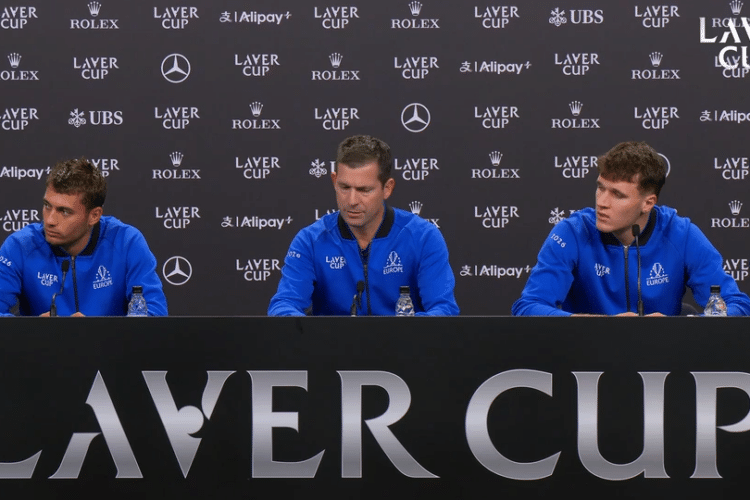
Two things stood out to Team Europe vice-captain Tim Henman during his time in San Francisco last year. They are the same two things that stand out in London: Carlos Alcaraz’s infectious personality and Yannick Noah’s impressive emotional intelligence.
“Yannick has been absolutely incredible, going back to San Francisco,” Henman said about the Team Europe captain. “His IQ and his EQ, his emotional intelligence, the way he dealt with players, different nationalities and personalities, he was incredible.”
Speaking to Andy Roddick on Sunday’s Served podcast, broadcast from the Laver Cup Fan Zone outside The O2 in London, Henman said it’s tricky to get to know new players in just three days, especially young stars such as Rafa Jodar, with whom you don’t have a prior relationship. “You do have to choose your moments,” Henman said. “I think you would border on the side of a little less than a little more. It is far easier to upset a player with too much information than upset a player with too little information. That is where Yannick has been amazing. His emotional intelligence has been amazing.”
Whether on or off the court, Henman said Alcaraz provides leadership for the team. “The time I spent with Alcaraz on the practice court, in the gym, having dinner, his energy, his aura, his enthusiasm, I was completely blown away,” Henman said.
When asked who provides the leadership on court, Henman mentioned Casper Ruud’s experience and willingness to be “brave” and give his advice, and “Alcaraz for his personality.”