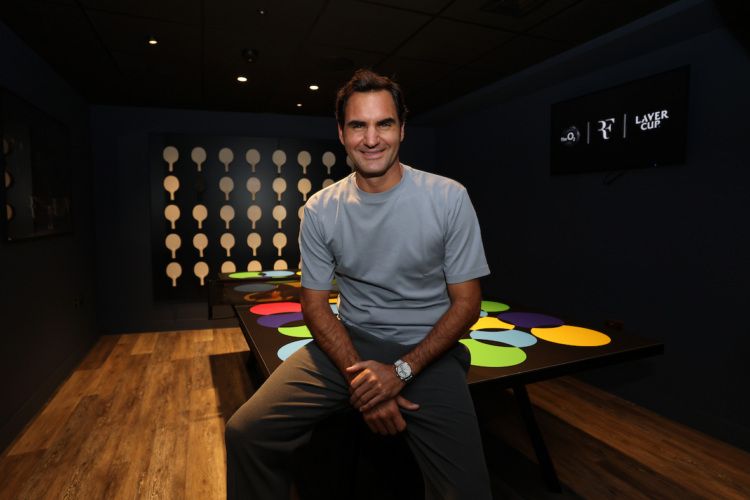
SEPT 25 - 27, 2026 | LONDON

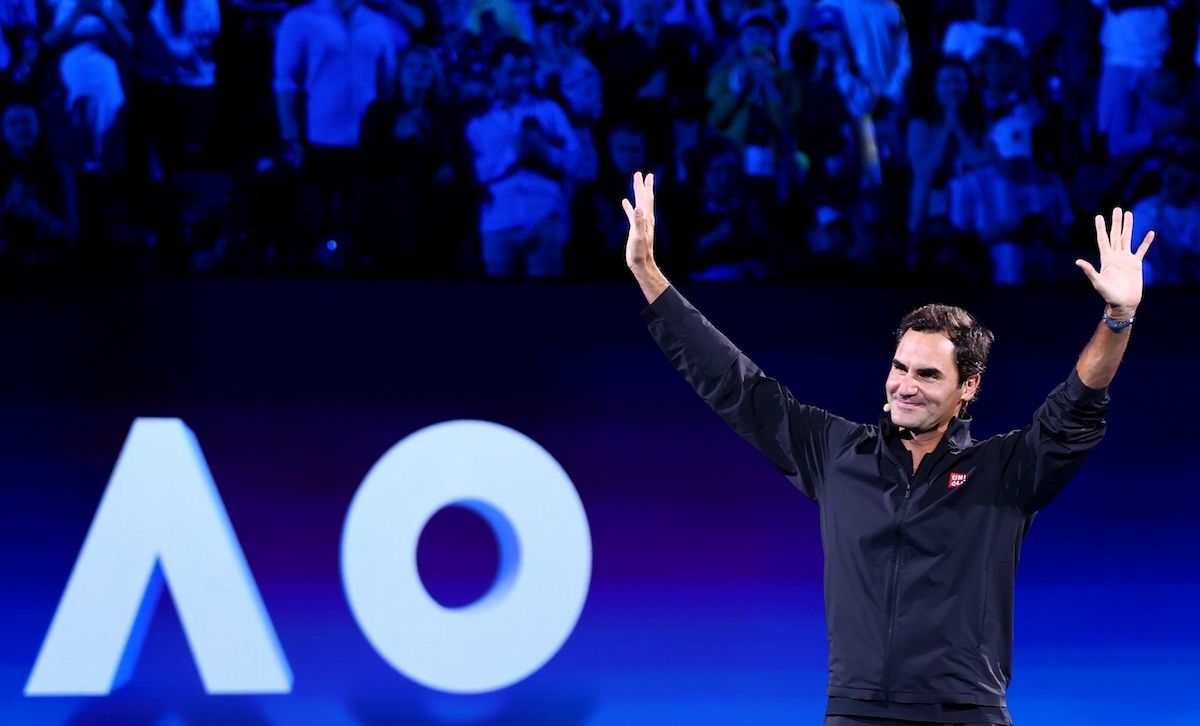
Twenty-time major champion Roger Federer returned to the Australian Open this week for the first time since 2020, where he was honored at the tournament’s inaugural Opening Ceremony.
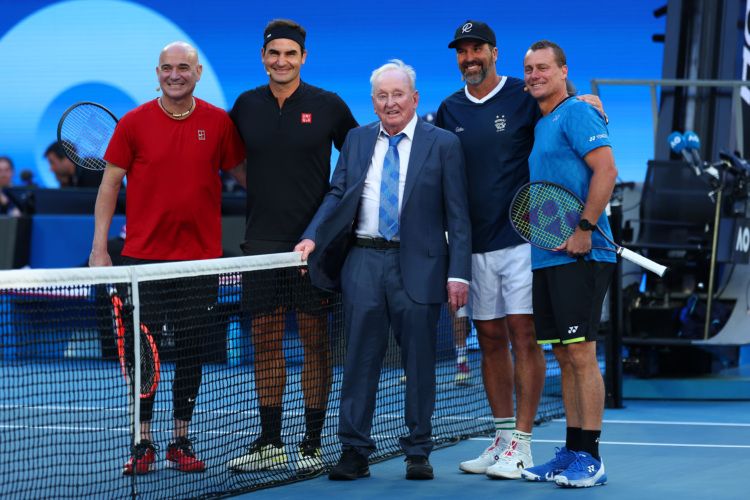
A six-time Australian Open champion, Federer took part in a special on-court face-off alongside Laver Cup Team World Captain Andre Agassi against former world No.1s Lleyton Hewitt and Team World Vice Captain Patrick Rafter.
The Swiss legend and co-founder of the Laver Cup reflected on his return to Australia and the remarkable 2017 comeback that added another chapter to his enduring legacy at Melbourne Park.
Federer also looked ahead to the Laver Cup’s return to The O2 in London, speaking in the lead-up to an emotional tribute at Rod Laver Arena, attended by Australian great Rod Laver himself — the man for whom the Laver Cup is named
Tonight, you will face Lleyton Hewitt and Team World Vice Captain Patrick Rafter, with Andre Agassi as your partner in the battle of number ones at the Opening Ceremony. What influence did these players have on you?
A big influence, all those guys. It’s nice to be back in Australia. Share the court with such legends. Rod Laver Arena, the whole thing. I always loved Pat’s playing style with the one handed backhand and everything. I was fortunate enough to play against him on several occasions – on grass, clay and hard. Whereas Lleyton and me, we go way, way back.
We played against each other in Zurich at the World Youth Cup. So, I know him for a long, long time. It’s nice to share the court again with him. Andre [Agassi] was very inspirational for me in the sense that, for me to start the [Roger Federer] Foundation early. He was the leader of the sport when I came up on tour. He still played for an extra, I’d say five years, [after] Pete Sampras. I think we played ten times. So, it’s just cool to be on the court again with the guys.
Is it true that Pat Rafter’s ponytail inspired you to have a ponytail?
It was a time when, in Switzerland, we all had blond hair when I played the Orange Bowl – the World Championships under 18. After that all of us guys in Switzerland let the hair grow. We all had that same look at the same time. Maybe he did inspire me.
You’ve said that of the six titles you’ve won in Australia, 2017 was the most special when you beat Rafa in the final. When you think about that match, what moment really stands out for you?
I’d say the special moment of that 2017 final against Rafa must be the match point. Suddenly, you look across the net, Rafa is still there after maybe three and a half, four hours. Finally, I have match point. In the comeback, after my problems with my knee, I played an incredible tournament, and here I am. I have a chance to win it. Hit the forehand, clicks the line. Obviously, that’s a challenge. I felt it was in maybe – it was just enough spin for it to touch. And that moment is just second to none. It’s just a beautiful, upbeat moment, an incredible moment in my career, in my life to be quite honest.
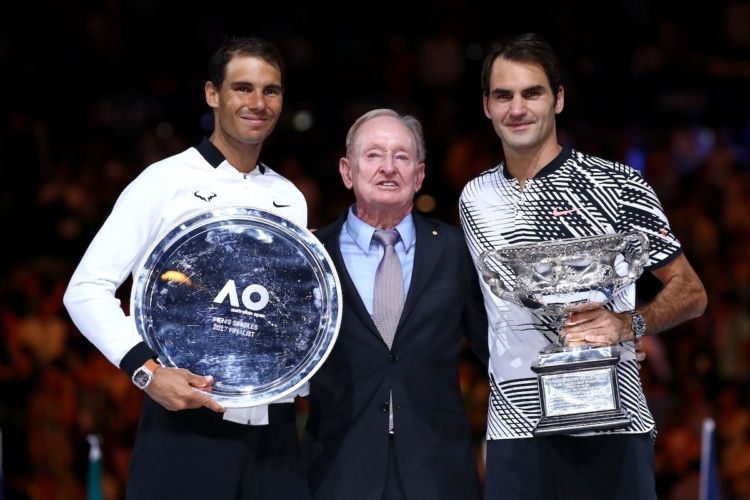
Overall, in 2017, you won seven titles including two Grand Slams. It’s considered one of the greatest comeback years. What was the secret to your success in that comeback?
I was very specific which tournaments I was going to play because I had to reimagine my game potential a little bit after the knee problems in ‘16. I had a great chunk of time to practice as well at the back end of the year because my knees started to recover around October. I had a good October, November, December to train for. That kind of helped me throughout the entire season.
And then I was very specific where I was going to play. I wasn’t sure how the knee was going to hold up in Australia, in America, in Europe, on clay, on grass. There were loads of open questions. But I mean, what a year that was. I couldn’t believe it. It shows training pays off. That’s what really what set me up nicely for the 2017 season.
You mentioned you made some adjustments? What were those things that you changed?
I had the chance to work on my backhand more, the returns. When you have injuries, you can’t train as much as you would like. At the same time, we’re always chasing tournaments and playing points. And when you play points a lot, you don’t really improve your game a whole lot other than the understanding of how points need to be played. Practice and training is what you need for your game to improve. I had almost 100 days leading into 2017, which helped me in a major way to improve my game.
You and Rafa really embodied the ethos of the Laver Cup. You were great rivals, but you also became great teammates. You played doubles together, first in Prague and again in your last match in London. When and how did you realize that you could have a relationship with someone who you were competing with for the biggest trophies?
Rafa was always very kind to me and to my team from early on. When he first came on tour, he was incredibly young and quite shy, and there was a deep level of respect there from the beginning.
As time went on, our rivalry naturally grew. We started playing each other more often, and usually on the biggest stages. That inevitably shifts your mindset just a little.
Later, we also began to see each other more as ambassadors for the game. We did a lot of promotions together, and in those in-between moments—waiting in corridors, standing just before matches—you share these quiet exchanges. A look, a small moment, where you can feel the respect and admiration you have for one another.
As we got older, life evolved. I started a family, we both experienced tremendous success, and things soften again. You gain perspective. At the end, it was a beautiful story that you can go through a 20-year career together and sit across from the table and actually have a great time after all the battles that we’ve had. He’s a great guy. I like Rafa a lot.
You helped co-found Laver Cup with Tony [Godsick] for Rod Laver. Why is Rod so important in the history of the game?
He’s the kind of person that went through a time in tennis that was crucial and very important, going from amateur to professional tennis. It was about the business. It was about the money situation. He drove tennis with his buddies, especially a lot of the Australian buddies and American buddies, into a place where we can profit from it today, and we’re very grateful that he did that.
He was maybe the most important figure when it comes to that, and that’s why I’ve always been extremely honored when I was in the presence of Rod or any of his peers. That’s why we came up with the idea to name our cup the Laver Cup and to honor him.
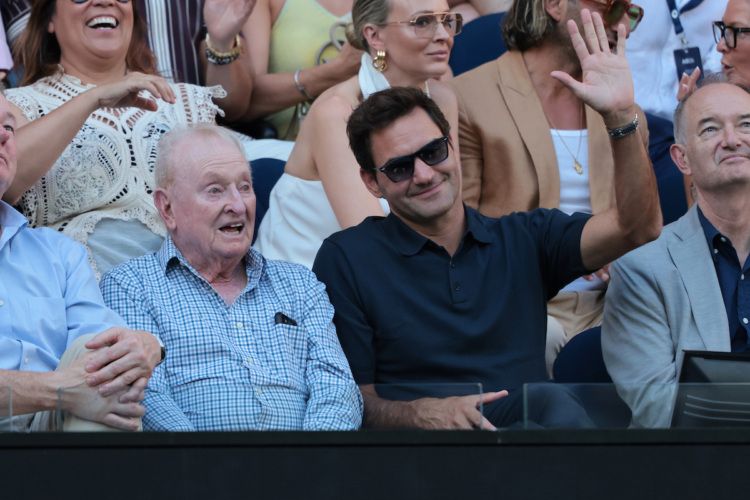
We’ve been through eight editions of the Laver Cup so far. What are you most happy and proud of when you look back on them?
I think the moments that we’ve created at the Laver Cup have been incredible, from legends like Rod Laver to be there through Agassi and then Bjorn Borg, John McEnroe and now Yannick Noah. To rally the troops and bring the players together. And then from players like me and Rafa, and Novak to speak to the younger guys that were on the teams, like Alcaraz and all the young guys, the 18, 19, 20-year-olds like Fonseca, that we’ve been able to create this interaction.
I’m very proud and very surprised that we were able to sell out the arenas everywhere we went. So far, that’s been a wonderful success. Plus, there was a moment where we played in Geneva, back home in Switzerland, which was special for me. And then, of course, the doubles that I played with Novak and Rafa were phenomenal. The end in London for me three years ago was just the best. So, a lot of moments that we were able to create and hopefully we can build on those more to the future.
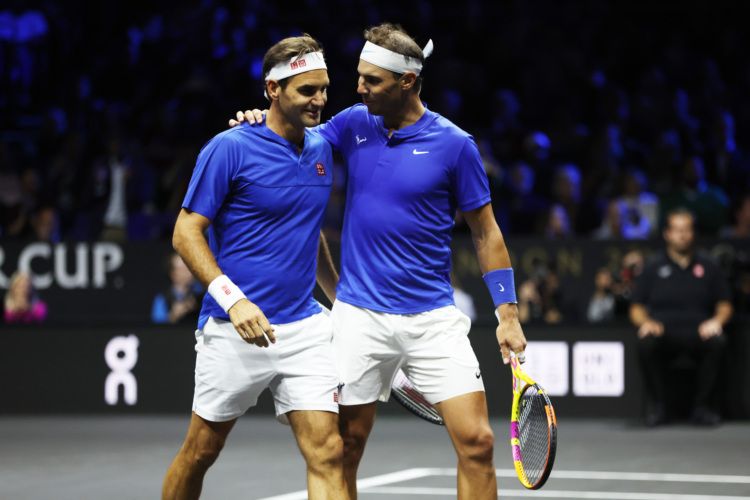
We’re heading back to The O2 this September for the Laver Cup. How special will it be for you to return there?
It will be nice to be back in London under completely different circumstances, this time of peace with my career, with my life. It was a turmoil going into London [in 2022], there were so many questions, so many emotions riding high on the announcement of me retiring and then the doubles with Rafa.
Is my knee gonna hold up? All the press I have to do. My friends that were going to be there in that spectacular moment. This time is going to be very different, much more relaxed. I’m going to be able to watch the matches also from the sidelines instead of being on the team. I love being in London. It’s been such an incredible place for me to play tennis. If it was Wimbledon or the World Tour finals before that, or the now the Laver Cup, every moment was beautiful.
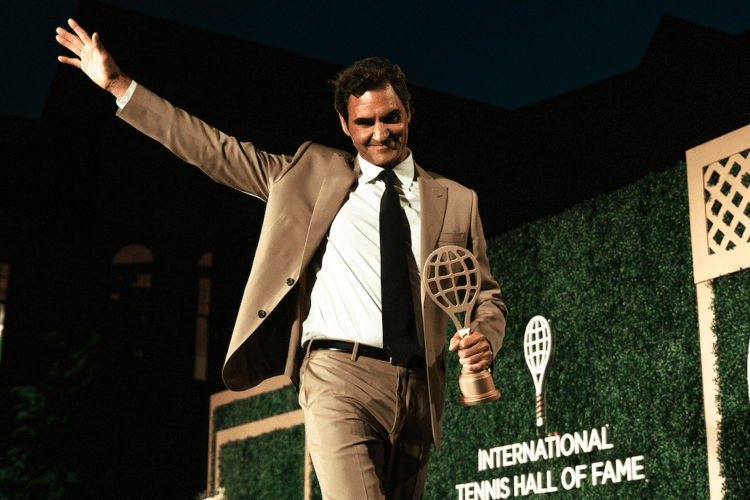
Later this year you’re going to be inducted into the International Tennis Hall of Fame. What are you most looking forward to?
The unknown about the Hall of Fame induction is what I’m really looking forward to. Maybe bringing up those incredible memories and moments that I’ve shared on the tennis court and realizing a little bit more of what I have achieved and what I’ve done. We’ll see what my legacy is going to be like, coming back to the roots of tennis at the Tennis Hall of Fame, a place where I’ve never been. I know it’s going to be beautiful this time.